Tick bites are increasing in the UK
In the UK, ticks appear to be more prevalent and there are a greater variety of species found (there are 21 types of ticks in the UK). Across the world tick populations are increasing because we are changing the climate. Milder winters and warmer summers raise ticks’ survival rates. Additionally, human expansion, especially cutting down woods and living in suburbs on previously forested land, has expanded tick habitat dramatically. Expanding suburbs means more prime habitat for mice and rats, who thrive eating our rubbish and harbour dangerous pathogens in their blood, like Lyme disease. More mice and rats support more ticks, who feast on rodents as well as sheep and other populations, lizards, birds, dogs, cats and other creatures. Ticks can also transmit diseases they pick up on human hosts. Pathogens, then, are expanding due to the way we live in the environment.
Checking for Ticks
Checking for Ticks
Ticks usually congregate in moist, dark and shaded areas like leaf litter. When hungry, they crawl up blades of grass, where they wait to brush on to anything savoury that walks past. On your body they seek a dark, damp area, like the backs of knees, navel, groin, armpits or behind the ears. There, they bite, injecting an anesthetic that prevents you from feeling pain or itchiness as they dig in.
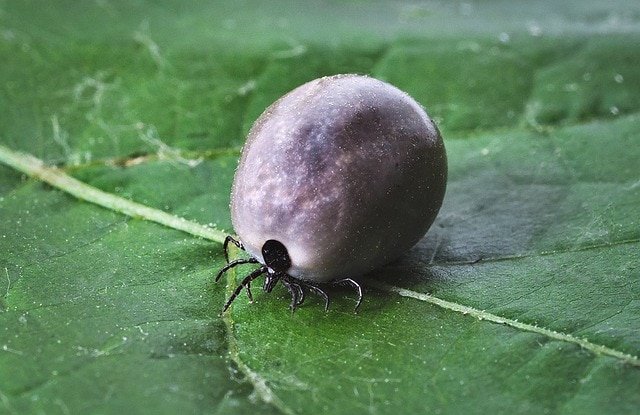
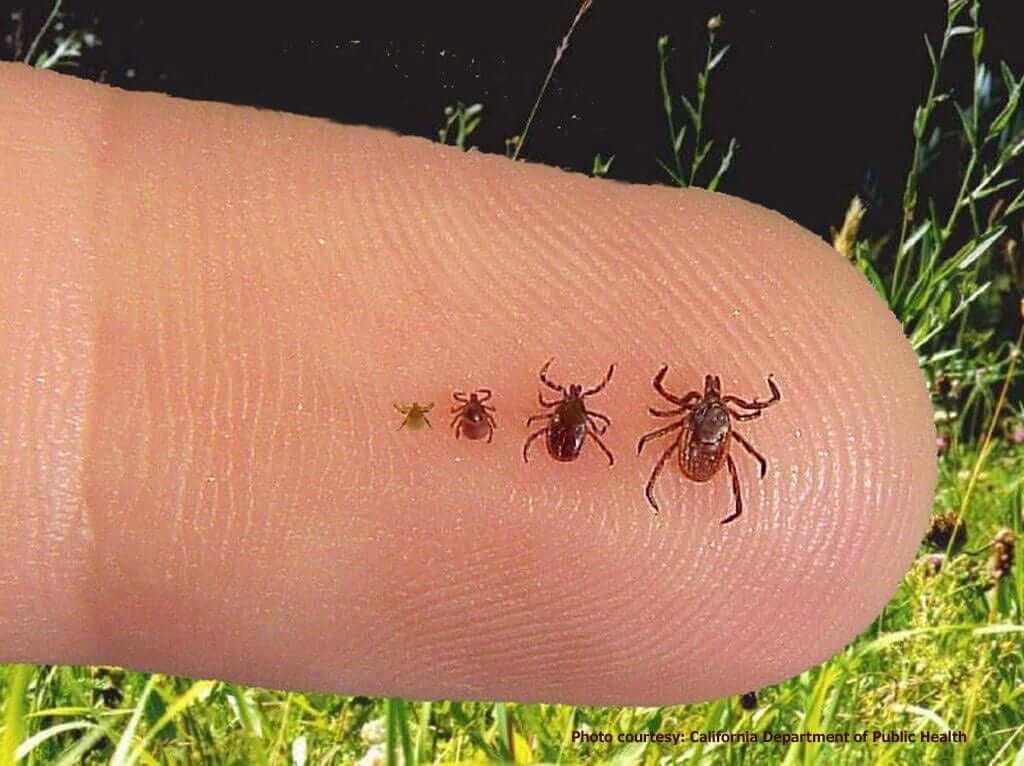
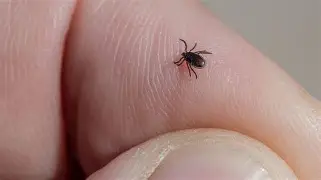
The best time to find a tick is before it bites. Showering immediately after spending time outdoors may wash a tick off before it has a chance to bite. Perform a tick check after being outdoors. This can be done alone with a mirror, and by lightly running your hands all over your body. Unfed ticks will feel like bumps the size of a poppy seed or a sesame seed. A fed tick can swell to the size of a blueberry. Another person can help with the search.
The longer a tick feeds, the more likely it is to spread disease. Removing a tick before it’s been on you for 24 hours greatly reduces the risk of disease transmission.
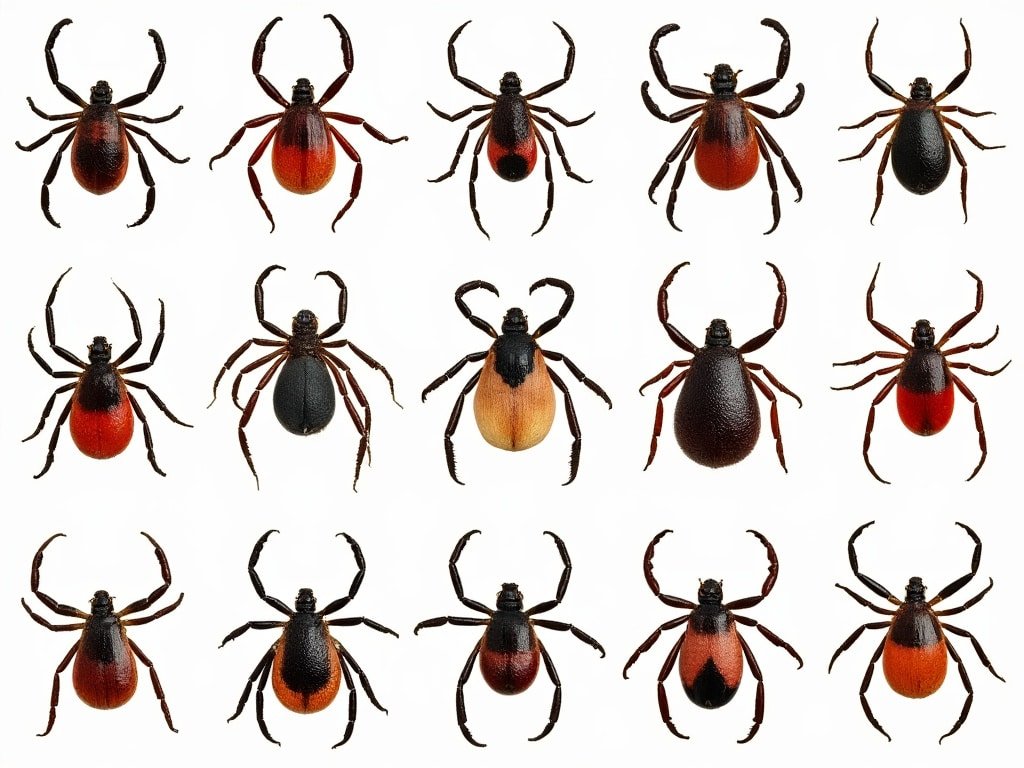
Photographs of Ticks
What to do if bitten
Try to get the whole tick out. Use fine tip tweezers with firm gentle pressure to grasp the tick at its head and pull it up. Try not to have the mouth parts break off and stay stuck in the skin.
Wash the bite site and your hands thoroughly with soap and water or rubbing alcohol.
We suggest saving the tick in a Ziploc bag in your freezer, noting the date and geographic location it was found, if possible – if you begin to exhibit flu-like symptoms, facial drooping, severe headaches or any new health issues in the month after your bite, you can get it tested.
If bitten…
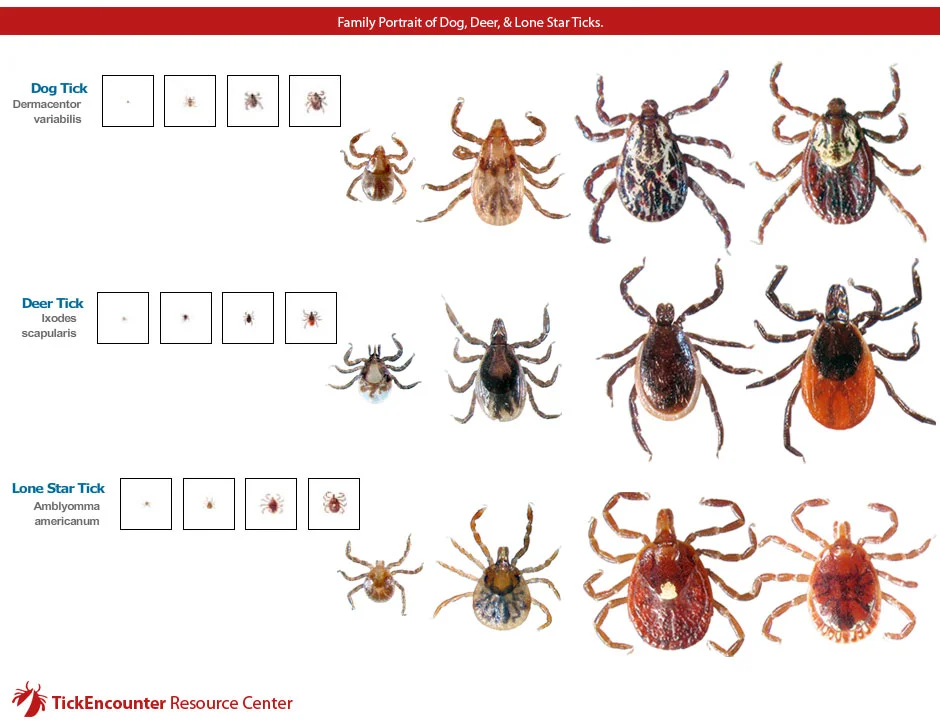
Consult your GP after a bite. They may give you an antibiotic prophylaxis – typically a single dose of doxycycline – to protect against Lyme, as well as other diseases commonly caused by ticks such as anaplasmosis and ehrlichiosis. However, there are some tick-borne illnesses that cannot be treated with antibiotics. These include alpha-gal, an allergy to red meat and other animal products, and babesiosis, a parasitic infection that causes flu-like symptoms and jaundice. If you notice any strange symptoms in the weeks after your tick bite, talk to a doctor right away.
If you see an expanding solid red or bullseye-shaped rash near the site of your bite, this may be a sign of early Lyme disease. Your doctor may give you a longer course of antibiotics: one to two weeks, depending on the advice of your regional health authority.
Prevention
Wear Environmental Protection Agency-approved insect repellants such as Deet or picaridin, long-sleeved shirts, long trousers and closed shoes, and tumble-dry clothing on high after returning home to kill any lingering ticks. Stick to the open middle of trails while hiking rather than getting too close to brush or leaf litter.
Stone walls are attractive to rodents, and have been shown to harbour high concentrations of ticks.
Pet owners are at higher risk for tick bites due to spending a lot of time with their pets outdoors. Pets can also transport ticks on their bodies. Check dogs for ticks and comb their fur out before they come indoors.